Ch 1 Patterns in Mathematics
Films in this chapter
-
 8:15
Concept film
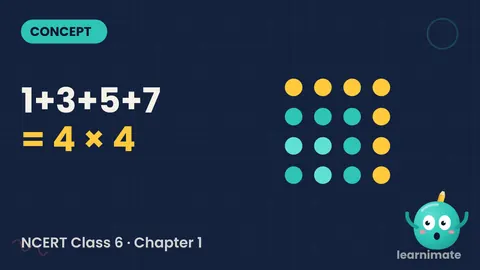
Sum of Odd Numbers Is a Square, Visually
- Coming soon Concept film Triangular and Square Numbers
- Coming soon One shot Patterns in Mathematics One Shot
In this chapter
In this chapter. The first chapter of Ganita Prakash sets the tone for the whole book: mathematics is presented as the search for patterns and for the reasons behind them. Rather than starting with rules to memorise, it invites you to look closely at familiar things, notice what repeats, and then ask why.
The chapter begins with well-known lists of numbers: the counting numbers, the odd and even numbers, the square numbers, the cube numbers, and others such as the triangular numbers and the powers of two. It then shows how many of these lists can be drawn as pictures, for example as dots arranged in rows, triangles or squares. A picture often makes a pattern easier to see, and easier to explain.
Next, the chapter looks for links between one list and another. The best-known link is the one our film explores: if you add the odd numbers in order, starting from 1, the running totals are always square numbers. Picture each odd number as an L shape and you can watch every L wrap a square into the next square, so a sum like comes out as without any adding. The same odd numbers, arranged in rows, also give the cube numbers.
The chapter ends with patterns in shapes, such as sequences of regular polygons and figures that grow step by step, and connects those shapes back to number sequences. Throughout, the habit it builds is the same: spot a pattern, draw it, and explain why it always works.